
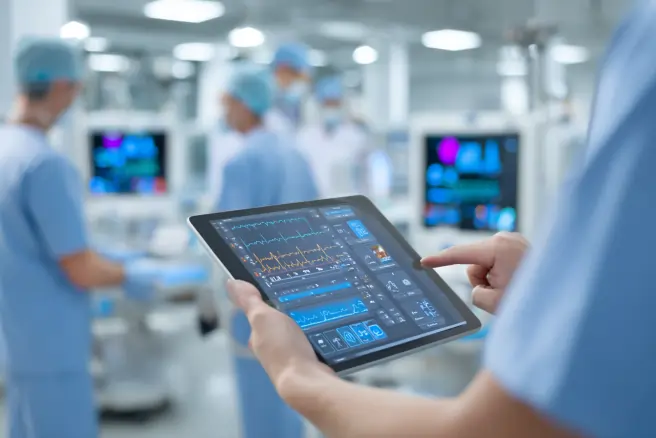
Medical device software development has emerged as a pivotal aspect of modern healthcare. With the increasing reliance on technology for diagnostics, treatment, and patient monitoring, the role of software in enabling accurate and efficient medical solutions cannot be overstated. As healthcare systems worldwide face rising demands for better outcomes and streamlined processes, software designed for medical devices is bridging critical gaps in care delivery.
The Evolution of Medical Device Software
Medical device software has evolved significantly over the past few decades. Early devices relied on rudimentary programming to complete basic tasks. Today, however, advanced algorithms, integration capabilities, real-time data processing, and even artificial intelligence (AI) have taken center stage. This evolution reflects an ongoing effort to address complex challenges in patient care while improving efficiency across healthcare settings.
Key milestones in its evolution include: – Transition from hardware-centric designs to software-driven systems
– Adoption of mobile platforms enabling remote patient monitoring
– Integration with AI and machine learning tools for predictive analytics
– Implementation of cybersecurity measures to safeguard sensitive health data
Why Medical Device Software is Essential Today
- Many diagnostic tools rely on sophisticated algorithms to interpret data from imaging scans or sensor inputs.
- For example, wearable devices equipped with biosensors use software to monitor vital signs such as heart rate or blood oxygen levels with high accuracy.
- Real-time monitoring ensures that clinicians are alerted promptly during critical events.
- Remote patient monitoring systems reduce hospital readmissions by keeping track of patients’ conditions after discharge.
- Integrated systems enable hospitals to manage patient records seamlessly across departments.
- Automation powered by medical device software reduces manual errors and enhances workflow efficiency.
- Advanced algorithms now allow treatments tailored specifically for individual patients based on their genetics or unique health profiles.
Challenges That Reinforce Its Growing Need
| Challenge | Implication | Solution |
| Regulatory Compliance | Strict regulations demand robust validation processes | Adopting flexible yet compliant development frameworks |
| Data Privacy & Security | Ensuring patient confidentiality amidst increasing cyber threats | Implementing advanced encryption methods |
| Interoperability | Devices must communicate effectively across platforms | Designing standards-based solutions |
| Technological Advancements | Rapid innovation leads to shorter product lifecycles | Continuous learning and adaptation |
By addressing these challenges through dedicated research and investment into development processes, medical device software will continue playing a transformative role in modern healthcare.
Looking Ahead
As the industry progresses toward value-based care models focusing on outcomes rather than procedures performed, the demand for innovative medical device software will only increase further. From reducing administrative burdens in clinical workflows to fostering personalized care strategies at scale—its contributions are shaping a new era defined by efficiency and excellence within global healthcare systems: orthogonal.io/services
How Connected Medical Device Services Enhance Workflows and Improve Patient Care
Medical device software development is transforming modern healthcare by enabling innovative solutions that improve workflows and enhance patient outcomes. With advancements in technology, the integration of software into medical devices has become a pivotal element in addressing challenges faced by healthcare providers. Below, we explore the key benefits of investing in medical device software development and how it contributes to streamlining operations while delivering better care.
Enhanced Operational Efficiency
Medical device software significantly improves operational efficiency within healthcare settings by automating routine tasks, reducing errors, and optimizing resource management. This allows healthcare professionals to focus more on patient care rather than administrative burdens.
- Automation of repetitive tasks: Software solutions automate data entry, report generation, and device calibration.
- Faster diagnostics: Real-time data processing enables quicker diagnosis through advanced imaging or monitoring technologies.
- Seamless integration with EHRs: Medical devices can communicate directly with electronic health records (EHR) systems, providing up-to-date patient information without manual input.
Improved Patient Outcomes
- Real-time monitoring: Wearable devices equipped with smart software can monitor vital signs and alert both patients and clinicians about potential health risks.
- Early detection: AI-driven diagnostic tools help identify diseases at earlier stages when treatments are more effective.
- Medication adherence tools: Mobile applications linked to medical devices remind patients about medication schedules or provide alerts for missed doses.
Cost Reduction for Healthcare Systems
- Reduced need for redundant tests due to accurate initial diagnostics.
- Lower rates of hospital readmissions through continuous patient monitoring.
- Minimization of human error during critical procedures.
A study comparing traditional systems with those enhanced by software found that hospitals using integrated medical devices reduced their overall spending on diagnostic errors by 15%.
Enhanced Data Management and Security
Data collection is a cornerstone in modern healthcare delivery. Software-enabled medical devices ensure better data management while adhering to stringent regulatory standards regarding security.
- Centralized data storage: Devices collect and store information securely in compliance with HIPAA or GDPR guidelines.
- Advanced analytics capabilities: Collected data can be analyzed to identify trends or refine treatment protocols over time.
- Data encryption protocols: Secure transmission ensures that sensitive patient information remains protected from unauthorized access.
| Feature | Benefit | Example |
| Real-time Monitoring | Early warning signs identification | Wearable heart monitors |
| EHR Integration | Streamlined record updates | Connected infusion pumps |
| Predictive Analytics | Data-driven decision making | AI-based diagnostic tools |
Scalability and Customization Options
Another benefit lies in the flexibility provided by modern-day medical device software solutions. These systems are often modular, allowing customization based on specific clinical needs or scalability as facilities grow.
- Adapting features for small practices vs large hospitals.
- Upgrading functionality without replacing hardware entirely.
Customization options allow tailored solutions that align with specialized fields such as oncology, cardiology, or orthopedics.
By leveraging advancements in technology through medical device software development, healthcare institutions are empowered to deliver efficient services, reduce costs, ensure compliance with regulations, and above all provide quality care centered around the patient’s needs.
How SaMD services Enhance Workflows and Improve Patient Care
Medical device software has become an integral component of modern healthcare, offering a myriad of benefits that not only enhance operational efficiency but also improve patient outcomes. These advancements have revolutionized how healthcare providers deliver care, manage workflows, and ensure better decision-making.
Streamlining Clinical Workflows
- Automation of Repetitive Tasks: Processes like data entry, appointment scheduling, and inventory management can be handled by software, reducing manual effort.
- Enhanced Interoperability: Modern medical device software often integrates seamlessly with electronic health records (EHRs), lab information systems (LIS), and other hospital systems.
- Real-Time Monitoring: Devices equipped with software can provide real-time patient data to clinicians, ensuring quick responses to critical conditions.
- Centralized Data Management: Consolidating patient records in one location minimizes errors and improves access for all stakeholders involved in the care process.
Improving Patient Outcomes
- Advanced imaging software improves accuracy in detecting abnormalities such as tumors or fractures.
- Machine learning algorithms analyze patient history and diagnostics to support clinicians in making well-informed decisions.
- Wearable devices equipped with IoT-enabled software allow for continuous health monitoring.
- Patients with chronic conditions can share vital parameters like heart rate or blood pressure with their doctors without frequent hospital visits.
- Data analytics tools embedded within the software create tailored treatment regimens based on individual health profiles.
- This approach reduces trial-and-error medication prescribing and enhances therapeutic efficacy.
- Decision-support tools guide clinicians during diagnosis or surgery, minimizing the potential for mistakes.
- Automated alerts notify caregivers about potential drug interactions or critical changes in a patient’s condition.
Key Applications in Healthcare Settings
| Domain | Software Functionality | Impact |
| Radiology | Imaging processing tools | Improved diagnostic accuracy |
| Surgery | Robotic-assisted surgical platforms | Enhanced precision during procedures |
| Chronic Disease Management | Remote monitoring apps | Continuous tracking for better disease management |
| Administration | Hospital management systems | Optimized resource allocation |
| Rehabilitation | Virtual reality-based therapy programs | Accelerated recovery through engaging therapy methods |
Challenges Addressed by Medical Device Software
- Delayed access to critical patient information
- Communication gaps between multidisciplinary teams
- Dependence on manual processes prone to error
- Inadequate follow-up mechanisms post-treatment
Medical device software addresses these issues by providing actionable insights, facilitating cross-functional communication, and fostering a proactive approach to care delivery.
By streamlining workflows and improving patient outcomes through advanced functionalities, medical device software serves as a cornerstone in achieving modern healthcare goals efficiently.
Key Factors to Consider When Choosing MedTech Software Services for Medical Devices
Developing software for medical devices requires meticulous planning and attention to detail. Given the critical role these devices play in patient health and safety, the development process must adhere to stringent regulations, incorporate robust design principles, and prioritize performance and reliability. Below are the key factors that developers and organizations must consider when creating medical device software.
1. Regulatory Compliance
Medical device software is heavily regulated to ensure patient safety and efficacy. Developers must understand and comply with standards such as:
– FDA Regulations (21 CFR Part 820): Covers quality system regulations for U.S.-based medical devices.
– ISO 13485: International standard for quality management systems in designing medical devices.
– IEC 62304: Framework specifically addressing the lifecycle processes of medical device software development.
Failure to meet these standards can lead to delays in approval, financial losses, or even product recalls.
2. Risk Management
Medical device software often involves sensitive operations that could directly impact patient outcomes. Implementing effective risk management practices is critical:
– Conduct a risk analysis early in the development lifecycle to identify potential hazards associated with the software’s use. – Utilize tools like Failure Mode Effects Analysis (FMEA) to assess the likelihood and consequences of failures. – Implement mitigation controls wherever possible for identified risks.
The goal is not only ensuring compliance but also building user confidence in your product.
3. Usability Engineering
User-centric design is essential when developing intuitive interfaces for doctors, nurses, technicians, or patients who rely on these devices daily. Key considerations include:
– Ensuring ease of navigation by designing clear menus and workflows. – Providing visual aids or alerts that improve understanding during critical moments. – Testing usability through real-world simulations with actual end users.
Improved usability reduces human errors while enhancing productivity in healthcare settings.
4. Cybersecurity Measures
As digital threats become more sophisticated, cybersecurity has become a pressing concern for medical device software developers:
– Use encryption protocols like TLS/SSL to safeguard sensitive data during transmission. – Implement role-based access controls (RBAC) to ensure only authorized users can access certain features. – Conduct regular penetration testing on your software infrastructure.
A single security breach could undermine trust in your product while jeopardizing patient data privacy.
5. Interoperability with Other Systems
Modern healthcare environments require seamless integration between various hardware and software systems. Developers should aim for interoperability by:
| Standard/Protocol | Purpose | Example Use Case | |————————–|—————————————–|———————————–| | HL7 | Exchanging clinical information | Sharing lab results among EHRs | | DICOM | Handling medical imaging data | MRI image transfer | | FHIR | Accessing real-time clinical data | Synchronizing wearable devices |
By ensuring compatibility with existing systems like electronic health records (EHRs), developers simplify adoption while improving operational efficiency across healthcare teams.
6. Validation & Testing Processes
Software validation ensures that the final product performs as intended without causing unintended consequences. This involves:
1. Writing test cases covering all functional requirements. 2. Conducting both manual tests (e.g., user acceptance testing) and automated tests (e.g., regression testing). 3. Running stress tests under extreme conditions to evaluate performance boundaries.
Regular verification throughout the development lifecycle helps detect defects earlier, saving time and cost during later stages.
Focusing on these key considerations ensures robust functionality, regulatory approval, patient safety, and wider adoption of medical device software products within a highly competitive healthcare market landscape.
How AI and IoT Are Transforming Medical Device Software Development Services
The integration of Artificial Intelligence (AI) and the Internet of Things (IoT) in medical device software development is driving transformative changes in healthcare. These technologies enable smarter, more connected devices that enhance patient outcomes, optimize workflows, and improve the overall efficiency of medical systems.
Role of AI in Medical Device Software
- Predictive Analytics: AI can analyze vast datasets to predict patient outcomes or identify patterns that human practitioners might miss. For example, wearable devices with AI can monitor heart rhythms to detect arrhythmias or predict strokes.
- Medical Imaging and Diagnostics: Machine learning algorithms are increasingly used to assist radiologists by identifying abnormalities in CT scans, MRIs, or X-rays with high precision.
- Personalized Treatment Plans: AI-powered tools can recommend tailored treatment pathways based on individual patient data, improving the quality of care.
- Natural Language Processing (NLP): NLP algorithms assist in processing unstructured data like clinical notes, enabling better decision-making for healthcare providers.
Contribution of IoT to Medical Device Innovations
- Remote Patient Monitoring: IoT-enabled devices collect real-time health data such as blood glucose levels, blood pressure, or oxygen saturation from patients at home. This reduces hospital visits while allowing continuous monitoring.
- Connected Ecosystems: Devices interconnected via IoT ensure seamless data sharing among healthcare professionals for more coordinated care efforts. For instance, an IoT-enabled insulin pump can share usage data directly with physicians for improved diabetes management.
- Asset Tracking and Maintenance: Hospitals can leverage IoT-based solutions to track medical equipment and schedule preventive maintenance to minimize downtime.
Synergy Between AI and IoT in Medical Devices
| Feature | Impact | Example |
| Predictive Maintenance | AI algorithms analyze IoT sensor data from devices to predict maintenance needs | MRI machines reporting component wear before a failure occurs |
| Smart Alerts | Devices use AI to prioritize alerts based on urgency | Wearables flagging critical vitals anomalies before a routine check-up |
| Enhanced Patient Insights | Aggregated IoT-collected data is analyzed by AI for actionable insights | Chronic disease management improved via long-term trend analysis |
Challenges in Leveraging AI and IoT
- Data Security Concerns: Handling sensitive health information requires strict adherence to cybersecurity standards like HIPAA or GDPR.
- Interoperability Issues: Integrating devices from different manufacturers into unified systems is often complex.
- High Development Costs: Advanced hardware integration with software necessitates significant upfront investments.
By addressing these challenges head-on through robust design principles and regulatory compliance strategies, developers can fully harness the transformative power that both AI and IoT bring to medical device software development.
- The Growing Importance of Digital Health Services in Modern Medical Device Software Development
- How Vasmed Health Sciences Excels in Medical Device Software Development Services
- Exploring the Benefits of Connected Medical Device Services in Modern Healthcare
- Expert SaMD Services for Cutting-Edge Medical Device Software Development
- Connected Medical Device Services and Their Impact on Modern Healthcare
- A Complete Guide to Connected Medical Device Services and FDA Software as Medical Devices
- Innovative Digital Health Services and Medical Device Software Development Solutions
- Innovative Digital Health Services for Medical Device Design and Development